"The first full-suspension ski system hits the market."
That was Vail Daily's headline this week. We've been building toward that sentence for years, so it's worth spending a few minutes on what it actually means for the person standing on the ski.
Mountain bikes got suspension forty years ago.
Skis are still a plank.
That's not a slight. The rigid ski is a genuinely good piece of engineering, refined over a century into something predictable and fast. But it carries a constraint nobody has been able to design around: a rigid ski has no way to absorb anything. Whatever the mountain does, the ski passes straight through to the person standing on it.
You already know what that feels like. The chatter that starts halfway down a firm groomer. The compression at the bottom of a pitch that lands somewhere in your lower back. The way the last hour of a long day costs more than the first three.
What a suspension platform does differently
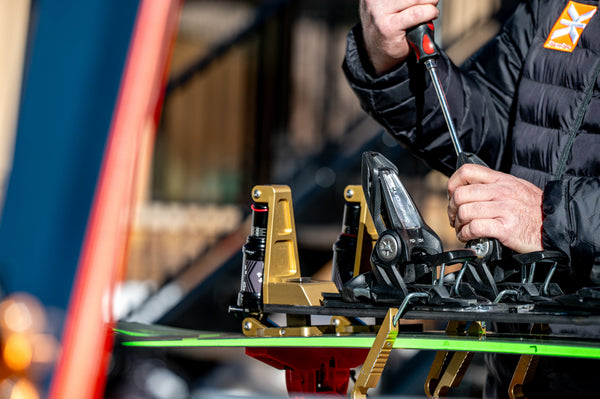
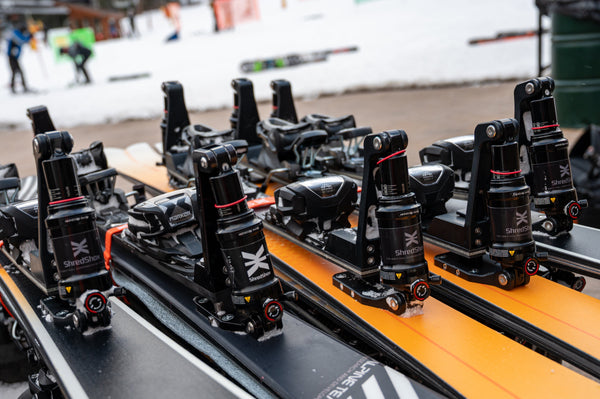
ShredShox builds the suspension into the ski itself — not an adapter, not a plate under the binding, but a platform where the shock is part of the ski's structure. When the surface changes, the platform moves before you do.
Two things follow from that.
The first is force. Up to 90% of the force that would otherwise reach your body is absorbed by the platform instead. That number is the reason people describe a ShredShox day as less expensive than a normal one — same terrain, same laps, and considerably less of it arriving in your legs.
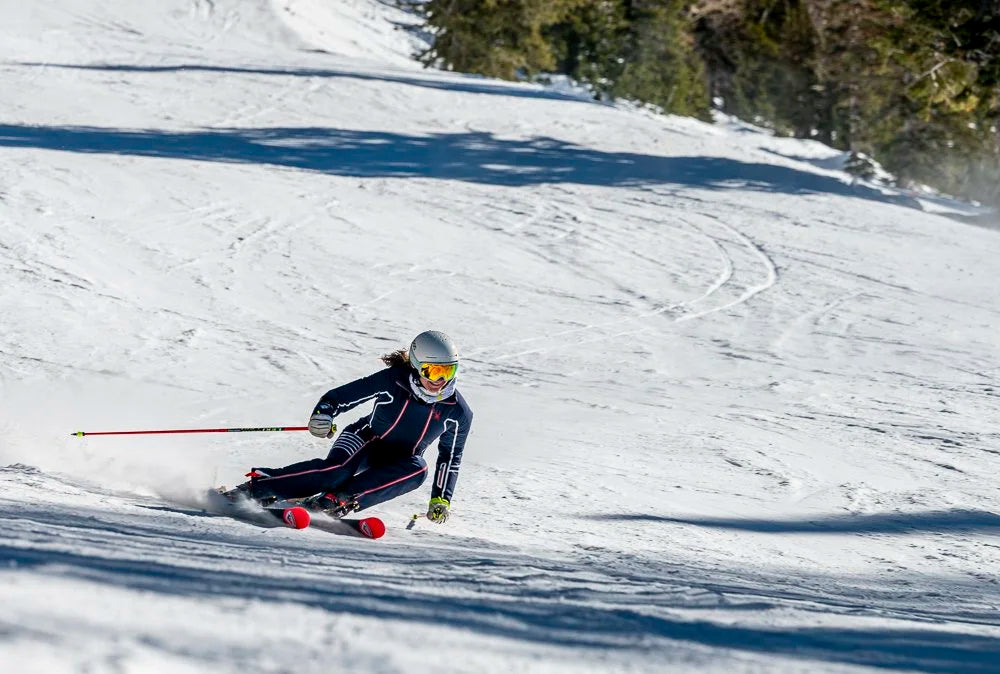
The second is contact, and it is the one that surprises people. A rigid ski deflects off an uneven surface; the edge leaves the snow, and for that fraction of a second you have no ski. A suspension platform absorbs the same input and keeps the edge down. More contact with the snow, more of the time — which is what control actually is, underneath the word.
What it feels like
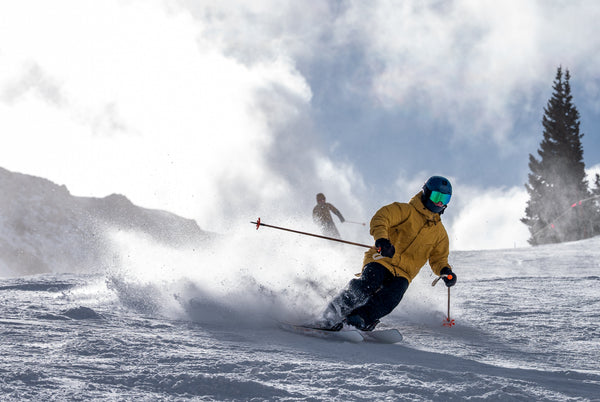
Composed is the word that comes up most. The run doesn't get easier, exactly — it gets quieter. The noise that a rigid ski transmits between you and the snow drops out, and what's left is a clearer read on what the surface is doing.
Sports Illustrated called it the most significant advancement in ski equipment in decades. GearJunkie said a single day on it had damped their skepticism. Alice Merryweather, a former World Cup racer, said she could turn her mind off and make beautiful turns. We'd put it less grandly: it's the first time the ski does part of the work.
Four platforms, two lengths
Palisades Black and Tahoe Orange are the core line at $1,995. Blue Line and Klassiker are built with Alps & Meters at $2,495 — the same platform underneath, finished in their alpine heritage design language. All four come in 162 and 175, with Tyrolia Attack 11 bindings pre-mounted.
Two lengths is a deliberate choice rather than a limitation, and we wrote about the reasoning behind it in Why We Built the ShredShox System Around Just Two Ski Lengths. If you're between sizes, start there.
In stock now
This is the first production run of the platform, and it is a fixed number. It is finished, in the warehouse, and shipping — orders leave us within 1–2 business days.
Some of it is already thin by length. Tahoe Orange in 175 is ten pairs, and that is the whole run in that size.